Fresh Guava Font Review
It started with a blank brand board, the kind that makes you pause and think about what the project needs. A client wanted a fresh, modern identity for a new boutique skincare line, something that felt personal and elegant without being too formal. I reached for Fresh Guava, a script handwritten font that promises to bring a touch of grace to any design.
Fresh Guava for Logo Design and Brand Identity
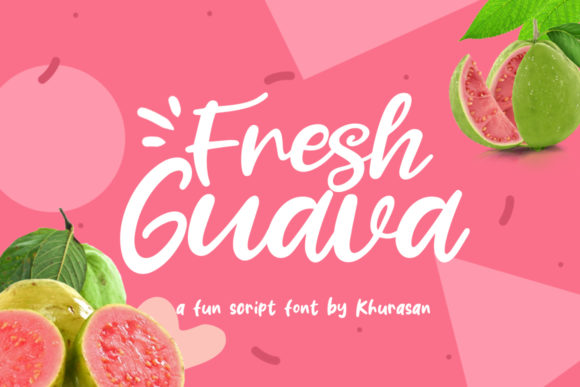
Fresh Guava is a delicate, elegant and flowing handwritten font that brings a softness to logo design. When I tested it on a logo concept, the curves and flourishes felt just right—like a signature written with care. It has beautiful and well balanced characters, making it versatile enough to work with both minimalist and more intricate branding systems. In a brand identity project, it added a human touch that made the overall look feel more approachable and authentic.
For a skincare brand, the font’s fluidity matched the idea of natural, gentle care. It paired well with a clean sans serif for body text, creating a visual balance that didn’t feel cluttered. The font’s personality was subtle but distinct, making it ideal for a brand that wants to stand out without being overwhelming.
Fresh Guava for Packaging and Product Labels
When I placed Fresh Guava on a packaging mockup, it immediately elevated the design. The font’s flowing lines gave a sense of movement, which worked well for product labels that needed to feel dynamic yet refined. It looked great on a small label, where its legibility held up even at smaller sizes. For a handmade shop or boutique, this font could be the perfect finishing touch on a product box or tag.
I also tried it on a business card. The font’s elegance translated well into a compact format, adding a touch of sophistication without sacrificing clarity. It was especially effective when used as a headline, drawing attention without overpowering the rest of the design.
Fresh Guava for Web Design and Social Media Graphics
Using Fresh Guava in web design required some careful consideration. As a display font, it works best for headlines, hero sections, and other prominent text elements. On a website header, it added a unique flair that stood out from more standard fonts. However, I noticed that it wasn’t the best choice for long paragraphs or dense content areas, where readability could suffer.
In social media graphics, the font shone. It looked great on Instagram posts, Pinterest boards, and Facebook banners. The flowing style caught the eye and gave a sense of creativity that aligned well with the platform’s visual culture. Pairing it with a bold sans serif for captions helped maintain contrast and readability without clashing.
Fresh Guava for Editorial and Commercial Design Assets
When I used Fresh Guava in editorial design, such as a magazine spread or flyer, it brought a sense of warmth and personality. It worked well for pull quotes, section headers, and other decorative elements. Its flowing nature made it feel more like an artistic statement than a standard typeface, which can be a powerful tool in storytelling.
For commercial design assets, like posters or signage, the font had a strong presence. It looked good on a shop sign, where its elegance complemented a modern storefront. However, I found that it wasn’t always the best fit for large-scale printing, where fine details could get lost. In those cases, a slightly bolder or more structured font might be preferable.
Fresh Guava for Creative Projects and Handmade Brands
As a creative font, Fresh Guava feels right at home in handmade or artisanal projects. It pairs well with other handwritten fonts, allowing for a cohesive and expressive typographic system. For a bakery, a craft store, or a local restaurant, it can add a personal, custom feel that resonates with customers looking for authenticity.
I also tested it on a poster for a small art exhibit. The font’s flow and character made it feel like part of the artwork itself. It was a great choice for a project that valued style over strict functionality, proving that sometimes the right font can be as much about emotion as it is about form.
Before using Fresh Guava in final client work, I recommend testing it across different mediums and sizes. It’s important to see how it performs in real-world applications, whether on a printed card, a digital screen, or a large banner. Checking commercial licensing is also essential, especially if the font will be used in client projects, merchandise, or online templates.